Key facts
- Dates — 1–2 August 2026
- Location — Somali National University, Mogadishu
- Participants — 15 academic staff from health sciences programmes
- Opened by — Dr Fuad Mire Hassan, Deputy Rector for Planning and Development
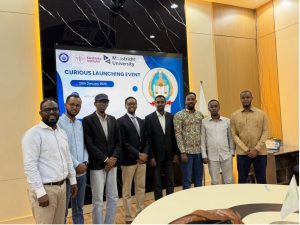
Somali National University organised a two-day CURIOUS Project cascading training for academic staff on 1–2 August 2026 in Mogadishu. The training transferred knowledge gained through the international Training of Trainers programme delivered by Maastricht University and Karolinska Institutet in May 2026 to a wider group of university educators.
The CURIOUS Project is a three-year Erasmus+ Capacity Building in Higher Education initiative focused on strengthening health professions education in Somalia through curriculum modernisation, innovative teaching methodologies, digital learning and institutional capacity development.
Opening and institutional commitment
The training was officially opened by Dr Fuad Mire Hassan, Deputy Rector for Planning and Development of Somali National University. He emphasised the University’s commitment to improving teaching and learning through international collaboration and continuous professional development.
Training objectives
- Strengthen academic staff capacity in competency-based curriculum development.
- Introduce modern student-centred teaching and learning methodologies.
- Enhance understanding of Problem-Based Learning (PBL).
- Improve knowledge of constructive alignment between learning outcomes, teaching strategies and assessment.
- Prepare academic staff for the three-month blended learning programme under CURIOUS.
- Promote sustainable institutional capacity through knowledge transfer.
Participants and facilitators
The training brought together 15 academic staff members from Somali National University representing different disciplines within the health sciences programmes. Facilitators were Abdifatah Ahmed Mohamed and Abdulwahab Moalim Salad Iman, who had completed the CURIOUS Training of Trainers programme at Maastricht University and Karolinska Institutet in May 2026.
Key training areas
- Curriculum development: competency-based curriculum design, curriculum review, programme learning outcomes, graduate competencies and curriculum mapping.
- Student-centred teaching: learner-centred approaches designed to strengthen engagement, critical thinking and collaborative learning.
- Problem-Based Learning: PBL philosophy, facilitator roles, group dynamics, learning objectives and real-life health scenarios.
- Constructive alignment: how learning outcomes, teaching methods and assessment strategies should be aligned to support effective learning.
- Teaching innovation: small-group facilitation, reflective learning, collaborative activities and digital learning tools supporting blended education.
Participatory methodology
The training adopted a highly participatory approach consistent with adult learning. Methods included interactive presentations, group discussions, practical exercises, case studies, small-group work, problem-solving activities, reflection sessions and experience sharing.
Outcomes and way forward
Participants demonstrated improved understanding of competency-based education and curriculum development, and gained practical knowledge of student-centred teaching and Problem-Based Learning. The cascading model expanded the number of academic staff equipped with modern educational approaches and supported institutional sustainability.
Following the training, participants will continue professional development through the three-month blended learning programme under CURIOUS. Somali National University will continue working with consortium partners on curriculum review, faculty capacity strengthening and institutionalisation of competency-based and student-centred education.
Source: CURIOUS Project Cascading Training for Somali National University Academic Staff Report, 1–2 August 2026.